

How Missions and Quests Are Built in Open-World Games
How designers build missions: objectives, triggers and state machines, scripted in data or a scripting language, with checkpoints and a way to fail.
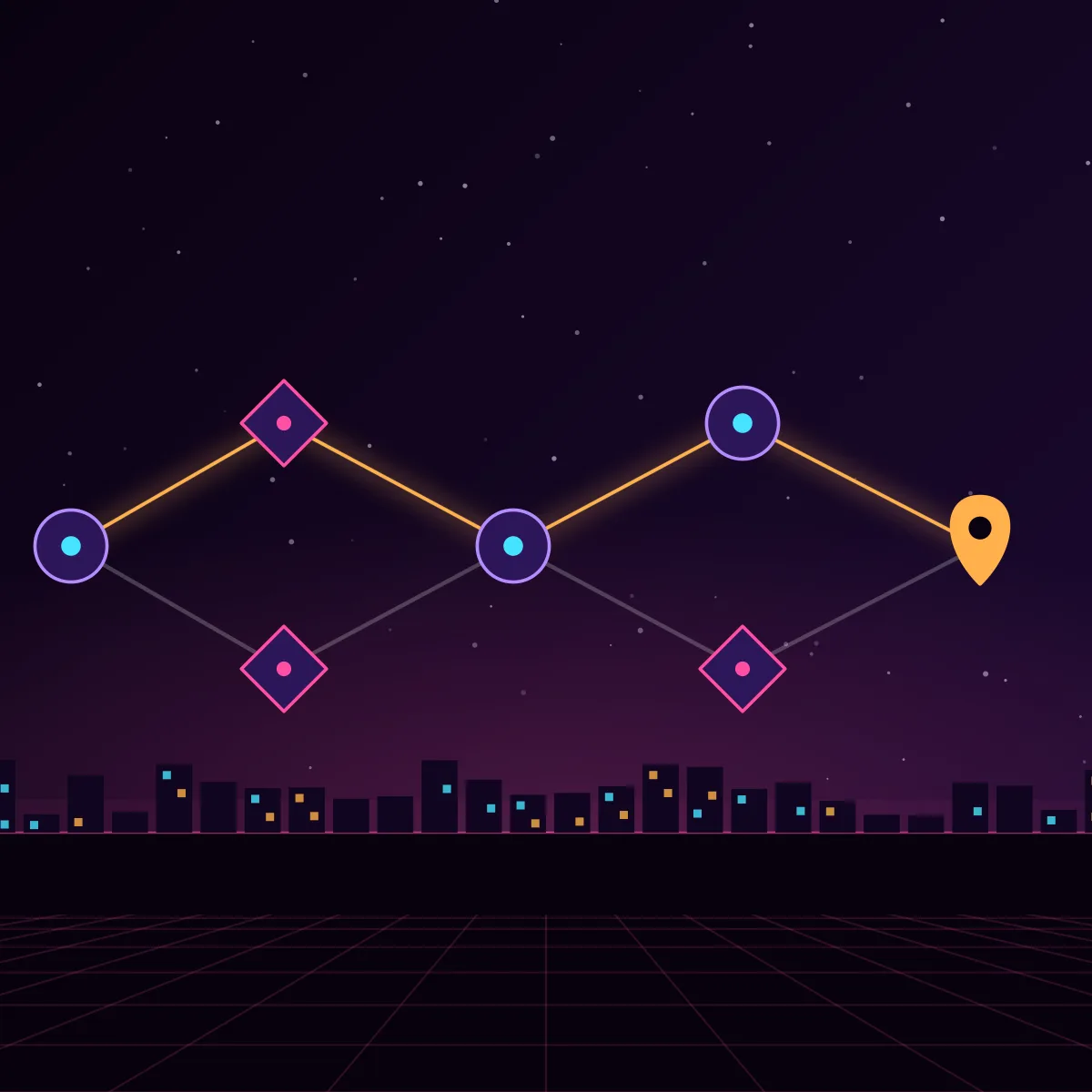
A mission is a small game inside the big game: go here, meet this person, drive to that place, get away. Behind it there is no magic, only a list of steps, conditions and events. Missions are built so that designers can create and change them quickly without asking a programmer every time. This article shows how.
A mission is a state machine
A mission is usually a chain of states. In each state the game waits for something to happen, then moves to the next state. For example: reach the marker, then talk, then drive to the garage, then escape the chase, then done. The game stores the current state, so it can save and restore the mission.
- Objectives: what the player must do now, shown on screen
- Triggers: invisible areas or events that start the next step, such as entering a zone or killing a target
- Conditions: rules that decide success or failure, such as time left or the health of a vehicle
- Rewards and consequences: money, items, unlocks or a changed world
Data first, code second
Good teams describe missions as data or in a simple script, and keep the code for the building blocks. A mission file lists the steps and refers to ready-made actions such as spawn a car, play a line of dialogue or set a marker. Scripting languages such as Lua or C#, visual tools such as Unreal Blueprints, or a graph editor let designers connect the blocks. New missions then need little new code.
Characters, dialogue and cutscenes
Missions use the other systems of the game: characters that walk by pathfinding, vehicles that drive by vehicle physics, and a HUD and map that point the way. Dialogue is stored as text with ids, which also makes translation easy. Cutscenes can be made in the engine with a camera track, so they use the same models as the game.
Checkpoints, failure and retry
A mission that sends the player back to the start after one mistake is frustrating. Designers add checkpoints and a fast retry. Failure has to be clear: a message tells the player why. The game must also clean up: remove the spawned cars and characters, and put the world back in a normal state.
Missions in an online game
- The server runs the mission logic, so that every player in the group sees the same result
- Progress is saved in the player's account, in a database
- Missions for groups need rules for what happens when a player joins late or leaves
Test every path
In an open world the player can do the unexpected: leave the area, destroy the target vehicle, arrive early. Testers and automatic tests check every path. The full overview is in how online open-world games are made.
Frequently asked questions
How are missions made in games like GTA?
Designers build missions from steps, triggers and conditions, usually in a data file, a scripting language or a visual editor. The game follows the steps as a state machine and uses ready-made actions to spawn characters, set markers and play dialogue.
Do missions need a lot of programming?
The building blocks need programming, but once they exist, designers can create most missions in data or visual tools. This is why studios invest in mission tools early.
How do games save a mission in progress?
The game saves the current state of the mission and the data it needs, such as the step number and the important characters. When the player returns, the mission is rebuilt from that saved state.